Jurassic Dinos editorial · Updated · Source-based review
What was Coahuilasaurus?
Coahuilasaurus was a plant-eating duck-billed dinosaur from northern Mexico. Its species is Coahuilasaurus lipani. Researchers described it in 2024 from fossils in the Cerro del Pueblo Formation of Coahuila, dating to the late Campanian within the Late Cretaceous.
Its story shows how an already known fossil can become a new scientific discovery. Finding a new animal is not always a matter of digging an unfamiliar bone from the ground. Sometimes it begins by asking whether an old identification really fits the preserved anatomy.
How much of the skull is known?
The study centres on the front portion of a skull. Researchers compared features of the premaxilla, near the front of the upper jaw, and the dentary, the tooth-bearing bone of the lower jaw. The strongly downward-curving dentary formed part of the distinctive combination.
A partial skull can be informative because it preserves structures that differ between related animals. However, it does not provide a directly measured complete body. Our account therefore avoids presenting an exact whole-animal length as though every vertebra and limb had been discovered together.
Why was it given a separate name?
The material had previously been linked with other hadrosaurs, including Kritosaurus. The new comparison supported a distinct species with a relationship to Gryposaurus. A historical identification is evidence of research history, rather than a rule that can never be revised.
The study also distinguished this fossil from a hadrosaur from the Olmos Formation at Sabinas. Both are Mexican records, but a shared country does not make them one species or one fossil locality. Keeping those records separate prevents a more complete-looking animal from being assembled out of unrelated discoveries.
Why study dinosaurs from southern Laramidia?
Laramidia was the western landmass of Late Cretaceous North America. Well-studied northern fossil sites do not necessarily describe every ecosystem farther south. Research in Mexico helps test how dinosaur communities varied across that landscape.
A regional difference in diversity is not automatically proof of a global increase or decline. Collection effort, preservation and the ages of compared layers must also be considered. Coahuilasaurus contributes one carefully identified record to that larger question.
What is artistic in our image?
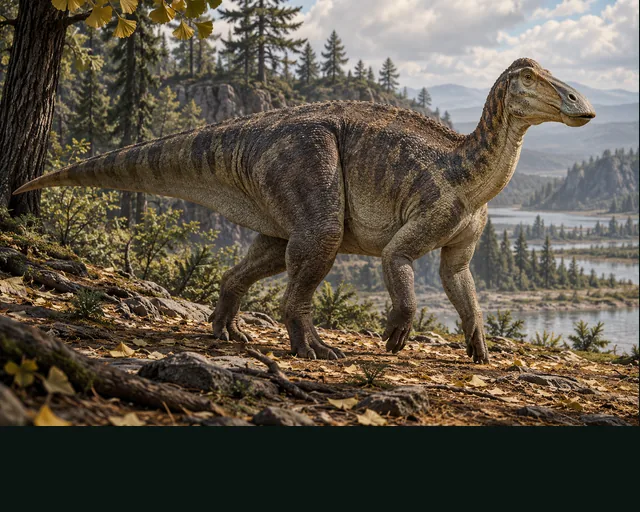
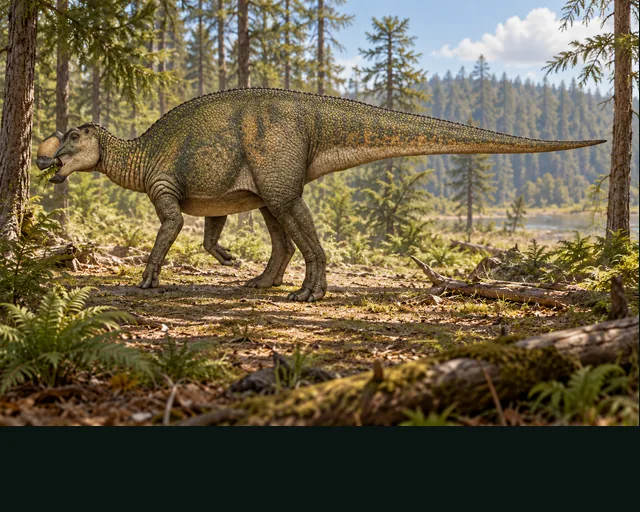
The illustration follows a complete restoration specifically identified as Coahuilasaurus. Its deep beaked head and body outline provide a visual introduction. The complete limbs, precise proportions, colours and skin pattern remain artistic interpretations. They do not add undiscovered bones to the naming specimen or establish its behaviour.
Compare Gryposaurus and Edmontosaurus, then explore the C directory.
Quick answers
- Where was Coahuilasaurus found?
- In the Cerro del Pueblo Formation of Coahuila, northern Mexico.
- Was a complete skeleton discovered?
- The naming study centres on the anterior portion of a skull, not a complete body.
- Why did the identification change?
- A closer comparison found a distinctive combination of facial and jaw features.
- Does southern diversity prove no dinosaurs were declining anywhere?
- No. Regional records must be compared carefully before drawing a global conclusion.