Jurassic Dinos editorial · Updated · Source-based review
What was Campananeyen?
Campananeyen was a rebbachisaurid sauropod from Patagonia. Rebbachisaurids belonged to the broader diplodocoid branch of long-necked dinosaurs. Its species, Campananeyen fragilissimus, is particularly interesting for the thin, delicate construction and air spaces found in parts of its skeleton.
A name referring to fragility does not mean that a living animal broke easily whenever it walked. Fossil descriptions concern particular anatomical structures, preservation and comparisons. Turning a descriptive name into a story about a helpless dinosaur would go beyond the evidence.
Which remains are known?
The university research account discusses one Campananeyen specimen with material from the skull region, vertebral column and sacral area, as well as claw bones. It highlights very thin bones and evidence of pneumaticity, including in a structure at the back of the skull and around the hip.
Pneumaticity means that air-related spaces entered parts of the skeleton. These spaces can help researchers investigate the connection between bones and the respiratory system. They do not imply that the animal flew or floated around its environment.
Why are the hips interesting?
The ilium, one of the main pelvic bones, is unusually thin. The research explores how surrounding bony structures and air-related tissues may have been arranged around this area. Such explanations concern internal anatomy and remain distinct from knowing the complete external body shape.
The same thesis discusses a separate young specimen as a possible related referral. Possible does not mean confirmed. We do not add that specimen to the type material and announce that a complete Campananeyen has been found.
Why do sources disagree about its age?
The 2024 naming study described the Candeleros Formation as lower Cenomanian, within the Late Cretaceous. A 2026 study of zircon crystals from volcanic-ash beds instead supports an Albian age, in the Early Cretaceous. This newer formation-level result changes the timeline used in older accounts.
An ash-bed date still should not be presented as the exact birthday of a dinosaur. Researchers must relate the sampled layers to fossil-bearing horizons and compare results across the basin. Our age label follows the revised broad placement without giving a false individual age.
How was the illustration made?
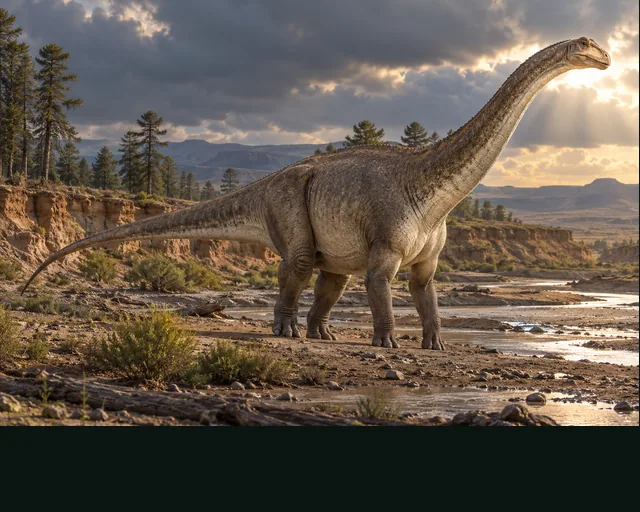
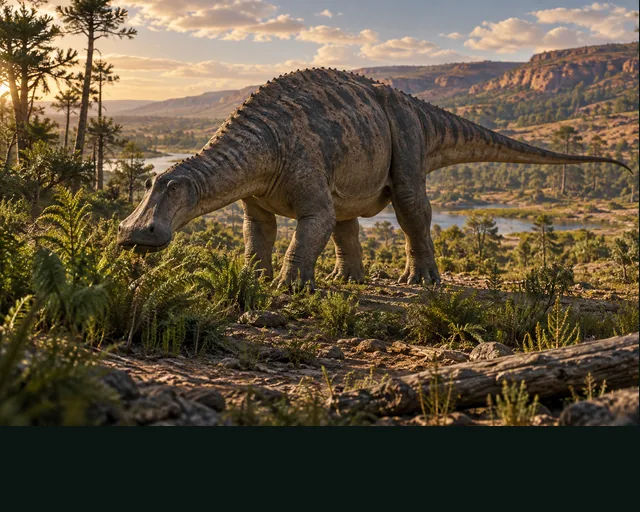
Our image follows Ddinodan’s complete, target-named restoration, retaining the low elongated neck, substantial trunk, weight-bearing limbs and long tail. Colours, fine soft tissues and completed proportions remain artistic. We did not invent a living outline from the fragile fossils.
Compare Nigersaurus and Limaysaurus, or explore the C directory.
Quick answers
- What kind of dinosaur was Campananeyen?
- A rebbachisaurid sauropod: a branch of long-necked plant-eaters within Diplodocoidea.
- Did air spaces let it fly?
- No. Skeletal air spaces do not turn a large four-legged dinosaur into a flying animal.
- Why do older sources say Late Cretaceous?
- The original 2024 description used a lower Cenomanian age. A 2026 dating study instead supports an Albian age for the formation.
- Was a complete skeleton found?
- No. The known type material is incomplete, and possible additional referrals must be distinguished from the type.