Jurassic Dinos editorial · Updated · Source-based review
Bahariasaurus ingens is a historical theropod name from the Late Cretaceous Bahariya Formation of Egypt. Its fossils were described by Ernst Stromer in 1934 and later destroyed during the Second World War. Questions about its identity must therefore rely heavily on surviving documentation rather than a fresh examination of all the original bones.
Why is the material difficult to interpret?
The named material was fragmentary, including vertebral and pelvic evidence rather than a complete animal. Other specimens were also referred to Bahariasaurus. A referral is a researcher’s proposal that material belongs to a taxon; it is not automatically as secure as the original name-bearing evidence.
Loss of the fossils makes it harder to test some observations, check damage or compare previously overlooked features. It does not justify filling those gaps with another dinosaur’s skeleton or an artist’s choices. The published record remains valuable, but its limits must remain visible.
What is the Deltadromeus proposal?
Cau and Paterna’s 2025 study re-examined the documented North African theropod material and proposed that the Moroccan genus Deltadromeus should be a junior synonym of Bahariasaurus. A junior synonym is the later of two scientific names interpreted as applying to the same taxon.
That is a published taxonomic hypothesis. This website does not present it as unanimous agreement or silently merge every specimen and measurement associated with the two names. Their historical assignments and debated relationships require careful treatment.
Why make a name explanation?
A name can remain useful for finding research even when its boundaries are disputed. This page explains that history without adding another securely distinct animal to the count or giving it a separate size-comparison record.
The distinction prevents a misleading result: one possible animal appearing twice in a dinosaur total simply because readers search for both names. It also avoids the opposite mistake of turning a new synonymy proposal into an automatic redirect before the wider evidence is assessed.
What can the illustration show?
Bubblesorg’s complete named Bahariasaurus artwork supplies the visual reference: a low elongated head, slender neck, long grasping forelimbs, long hind legs and a tapering tail. Its throat pouch, dorsal bristles, covering and colours are speculative artistic choices. The independent scene follows that complete artwork, not the lost bones or Deltadromeus as a substitute.
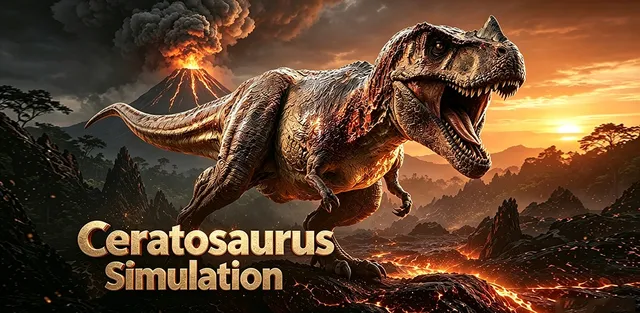
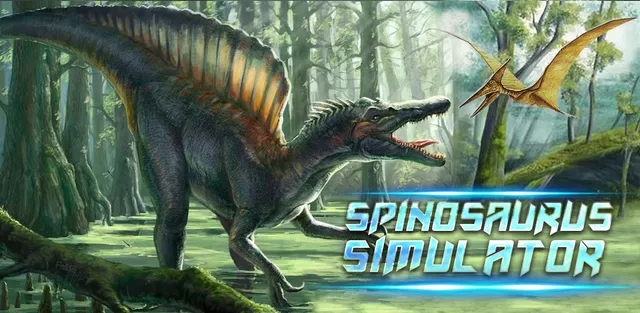
The image cannot restore evidence destroyed in wartime or prove that two genus names mean the same animal. For separate theropod comparisons, read Ceratosaurus and Spinosaurus, then explore the A–Z directory with the naming question in mind.
Quick answers
- What does this page explain?
- The historical name Bahariasaurus ingens and disputed interpretations of its fossil material.
- Are the original Egyptian fossils available?
- The material described by Stromer was destroyed during the Second World War; published documentation remains important.
- Is it definitely the same as Deltadromeus?
- Cau and Paterna proposed that synonymy in 2025. It is presented here as a taxonomic hypothesis, not a universal consensus.
- Does the picture settle its identity?
- No. The complete artwork is labelled Bahariasaurus but cannot validate a diagnosis, restore lost evidence or prove the proposed synonymy.