Jurassic Dinos editorial · Updated · Source-based review
Can the top of a skull reveal a new dinosaur?
Albertavenator was a troodontid dinosaur from Late Cretaceous Alberta. Scientists recognised it through careful comparison of frontal bones, which form part of the skull roof. The name Albertavenator curriei was introduced in 2017 and honours Canadian palaeontologist Philip Currie.
The defining material comes from the Horseshoe Canyon Formation. Its discovery as a distinct animal happened through renewed study of museum specimens, rather than the excavation of a complete feathered skeleton. The fossils are held in the Royal Tyrrell Museum’s collections.
How was it distinguished from other troodontids?
The original study compared the shape and proportions of the frontal with those of other troodontids. The Albertavenator frontal was relatively short and robust, with a combination of features that distinguished it from material previously assigned to Troodon.
This matters because a familiar label can hide several different animals. If isolated bones from different rock units are all placed under one name without detailed comparison, the apparent diversity becomes artificially small. Re-examining those identifications can reveal differences that were overlooked before.
Why were teeth not enough?
The Royal Ontario Museum’s announcement explains that teeth associated with a jaw tentatively linked to Albertavenator were very similar to those called Troodon teeth. The similarity limited their usefulness for distinguishing the animals. A tooth can be real and informative without answering every identification question.
Think of two keys with similar outlines: seeing only one small edge may not tell you which lock each belongs to. Scientists needed the more distinctive skull-roof evidence. This does not mean every isolated tooth can now be confidently reassigned to Albertavenator.
What did it eat, and could it fly?
Albertavenator belonged to a small-bodied theropod lineage, but the material reviewed here does not preserve a meal or establish a detailed food menu. We also do not use a feathered restoration as evidence that this dinosaur could fly. Feathers and flight capability are different questions.
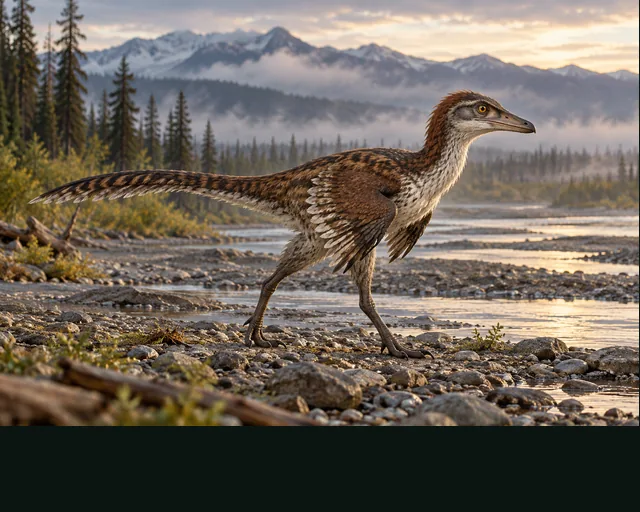
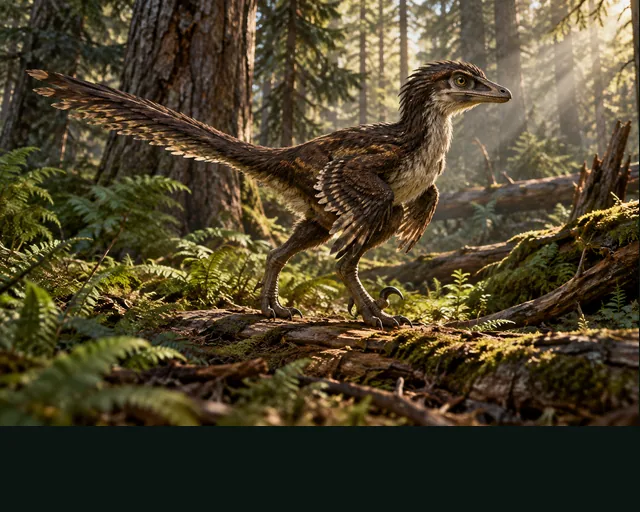
The complete feather covering, winglike forelimbs and tail shown in our image follow TotalDino’s full restoration specifically labelled Albertavenator. They are not all preserved on the known frontal bones. No exact adult body length or mass is entered into the comparison data from that artwork.
Why keep studying incomplete specimens?
An incomplete fossil can still answer a focused question when it preserves the right feature. Albertavenator shows how museum collections help test older identifications and improve our picture of small dinosaur diversity. More complete associated material would allow many additional questions about its body to be tested.
Compare Saurornithoides and Saurornitholestes, or browse the A–Z directory under A.
Quick answers
- Which bones identify Albertavenator?
- The original study used distinctive frontal bones from the roof of the skull.
- Who does the name honour?
- Albertavenator curriei honours palaeontologist Philip Currie.
- Can every similar isolated tooth be assigned to it?
- No. The museum report notes that similar teeth do not distinguish it reliably from other troodontids.
- Are the illustrated feathers preserved on its skull bones?
- No. The complete feathered appearance follows the named full-body reference, not preserved plumage on those bones.