Jurassic Dinos editorial · Updated · Source-based review
What was Eolambia?
Eolambia was a plant-eating hadrosauroid from Utah near the beginning of the Late Cretaceous. Hadrosauroids include duck-billed dinosaurs and close relatives outside the most specialised hadrosaurid group. Eolambia helps bridge that anatomical comparison.
What makes the fossil distinctive?
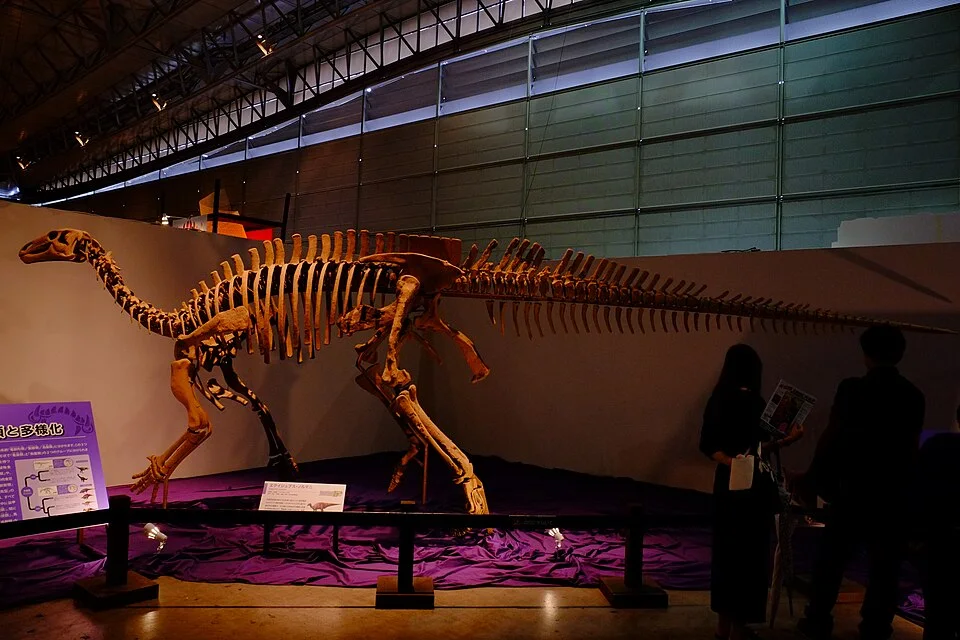
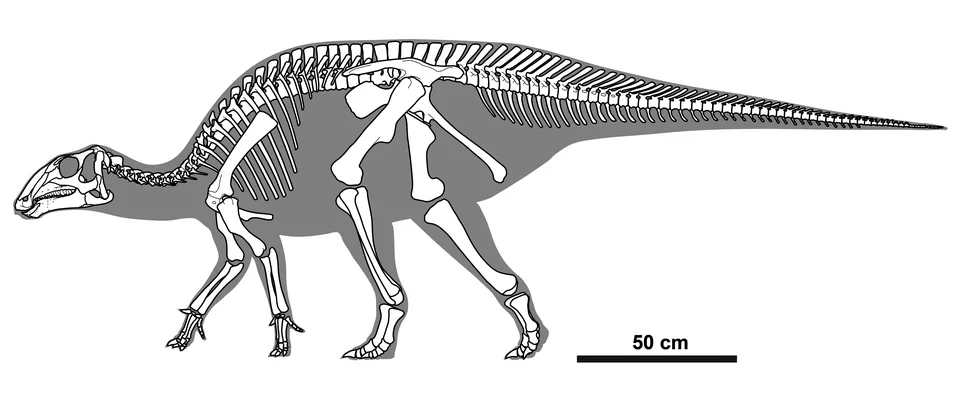
Numerous bones from both young and mature individuals preserve much of the skeleton. This allows researchers to study growth and variation as well as identify the animal. A feature present in a small individual can change as the skull or limb develops.
Where was it found and how was it named?
The original material was discovered in 1993, and James Kirkland named Eolambia in 1998. The species name honours discoverer Carole Jones. Its fossils come from the Mussentuchit Member of the Cedar Mountain Formation, a specific part of a geographically and temporally extensive rock unit.
What can we infer, and what remains uncertain?
The name means “dawn lambeosaurine”, reflecting an early interpretation of its relationships. Later studies place it outside the hollow-crested lambeosaurine group. Consequently, the name should not be used to give it a dramatic hollow crest in an illustration. Compare its actual jaw and limb anatomy with Equijubus and Gobihadros instead of reconstructing the animal from the literal wording of its name.
Did Eolambia have a lambeosaurine crest?
Its name does not establish that. Later analyses place it outside that group, so a hollow crest should not be added on the strength of the name.
How can you check the evidence?
The Paleobiology Database record catalogues Eolambia under Hadrosauroidea. Its linked bibliography identifies this research starting point: J. I. Kirkland. 1998. A new hadrosaurid from the upper Cedar Mountain Formation (Albian-Cenomanian: Cretaceous) of eastern Utah - the oldest known hadrosaurid (lambeosaurine?). Lower and Middle Cretaceous Terrestrial Ecosystems, S. G. Lucas, J. I. Kirkland & J. W. Estep (eds.). New Mexico Museum of Natural History and Science Bulletin 14:283-295. Open the bibliographic record. A catalogue entry establishes the source trail; it does not independently verify every later illustration or behavioural claim.
Use the dated genus overview to follow the references behind the discovery and anatomy discussed above. When sources disagree, compare which specimen and rock layer each author studied. A reconstructed whole animal can combine original bones with comparisons to relatives; those two kinds of evidence should not be confused. The account above explains the particular limits that matter for Eolambia, rather than supplying unsupported size, speed or lifespan figures.
Read the image and keep exploring
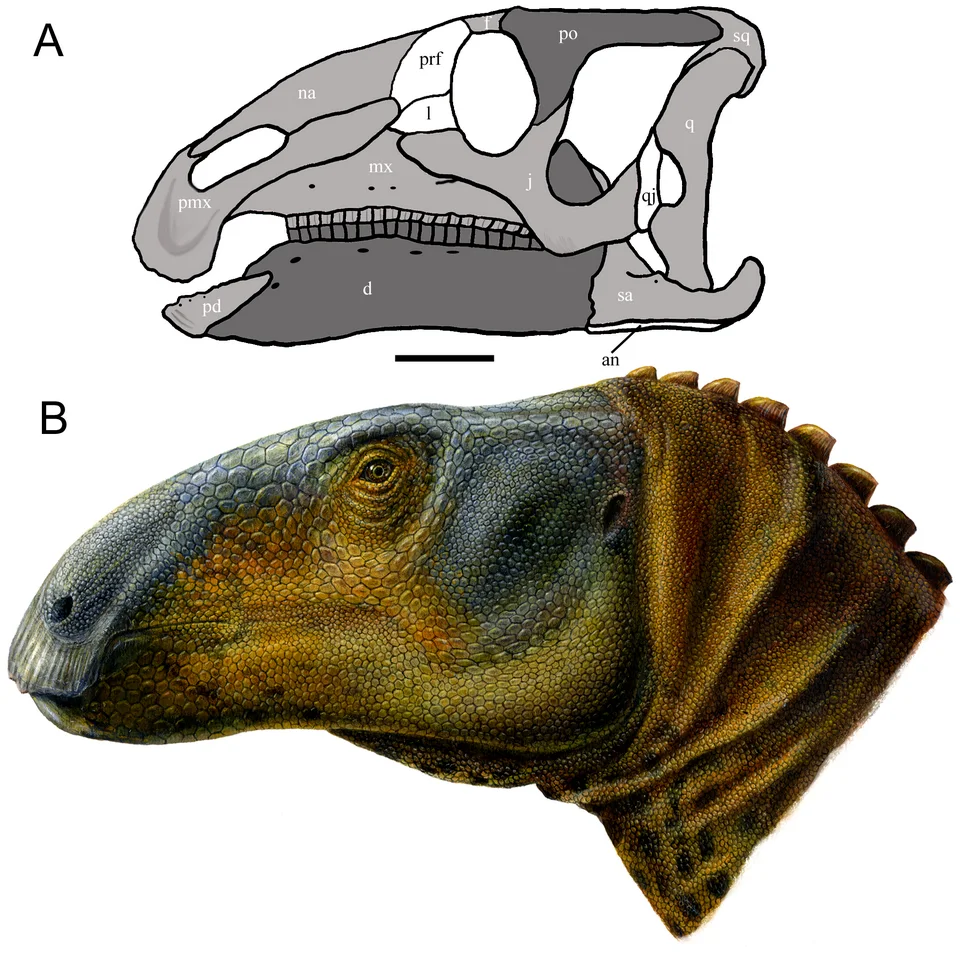
A skull reconstruction and a coloured head restoration of Eolambia distinguish underlying bone from an interpreted living appearance. This is an artistic reconstruction: colours, soft tissues and missing anatomy include interpretation, not a photograph of a living dinosaur.
Compare Equijubus, Gobihadros. Find more names in the E index and explore ornithischian field notes. The glossary explains unfamiliar fossil terms.
Quick answers
- Where have Eolambia fossils been found?
- The discoveries discussed here come from United States. Modern place names describe discovery locations, not a complete ancient geographic range.
- When did Eolambia live?
- It is placed in the Cretaceous period. See the discovery discussion for qualifications about the particular rock layers and dating.
- Where can I compare Eolambia with related dinosaurs?
- Follow the related field notes below. Comparisons explain shared anatomy; they do not imply that all the animals lived together.